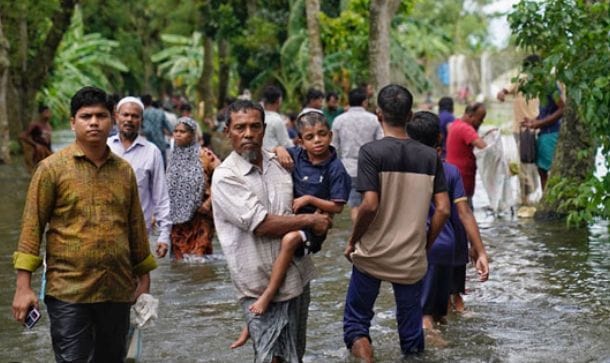
Md. Kamrul Hasan: Global climate change is no longer a distant threat—it is a harsh and undeniable reality of the present. Nature is increasingly revealing its destructive face, and among the countless victims of this crisis, children remain the most tragic and silent sufferers. In the long list of people affected by natural disasters, children are the most vulnerable, as they lack the capacity to protect their rights and are the least equipped to cope with crises.
Climate-induced disasters such as cyclones, floods, droughts, river erosion, heat waves, and salinity are inflicting deep and lasting damage on children’s lives, health, education, and mental development. Experts emphasize that due to their physical and psychological immaturity, children experience the negative impacts of climate change far more severely than adults.
Struggle for Survival
After every disaster, the most pressing challenges for children are the lack of safe shelter, clean drinking water, and adequate food. Countless children in coastal and char (river island) areas are now homeless and exposed to harsh living conditions. Many are forced to spend nights under open skies, increasing their vulnerability to illness and physical harm. During emergencies, limited access to healthcare often turns common illnesses into life-threatening conditions.
Severe Crisis in Health and Nutrition
Rising temperatures caused by climate change have led to a sharp increase in diseases such as diarrhea, dengue, malaria, pneumonia, and respiratory infections. Children in coastal regions are particularly affected by salinity intrusion, suffering from skin diseases, high blood pressure, and chronic malnutrition. Malnutrition not only weakens children physically but also hampers brain development. Medical professionals warn that malnourished children face learning difficulties and are less likely to grow into healthy, productive citizens.
Collapse of the Education System
One of the most devastating consequences of climate disasters is their impact on education. Every year, hundreds of schools are damaged or destroyed by cyclones and floods, forcing prolonged closures in many regions. As a result, thousands of children drop out of school permanently. Displacement following disasters further restricts access to education and pushes many children into child labor—whether in agriculture, domestic work, or other hazardous forms of employment.
Invisible Wounds on Mental Health
The psychological toll of climate disasters on children often remains unseen. The loss of loved ones, destruction of homes, repeated displacement, and an uncertain future create deep emotional scars. Child psychologists warn that climate-related trauma leads to fear, anxiety, depression, and low self-esteem among children. If left unaddressed, these mental health challenges can severely hinder personality development, social behavior, and future leadership potential.
Urgent and Coordinated Action for Child Protection
Experts and development agencies stress that children’s needs must be prioritized in climate adaptation and disaster management strategies. Building child-friendly shelters, ensuring access to safe drinking water and nutritious food, strengthening mobile and community-based healthcare services, and constructing disaster-resilient educational institutions are now urgent necessities. At the same time, raising climate awareness among children, incorporating their voices into policymaking, and enhancing international cooperation are crucial steps toward sustainable solutions.
Today’s Responsibility to Protect Tomorrow’s Generation
According to experts, today’s children are tomorrow’s citizens, scientists, policymakers, and leaders. Protecting them from the impacts of climate change is essential to building a safe, just, and sustainable future. However, if effective, long-term, and coordinated actions are not taken now, the heaviest price of climate change will be paid by innocent children.
Addressing the climate crisis is not merely an environmental issue—it is a matter of humanity, justice, and the fundamental rights of future generations. Saving children today means safeguarding the future of our planet.