Md. Jamal Uddin
The morning sun over Dhaka used to feel gentle, almost comforting. But now, even at dawn, a thick, humid warmth hung in the air like an unwelcome guest. Ayesha wiped the sweat from her forehead as she stepped out of her small apartment in Mirpur. It was only 7 a.m., but the temperature already felt closer to midday.
“Another hot day,” she murmured, tightening her grip on her bag. The forecast had warned of a heatwave, but in recent years, that had become less a warning and more a routine announcement.
For Ayesha, a schoolteacher, the heat was more than discomfort—it was a daily battle. The narrow roads were already crowded. Rickshaw pullers pedaled slowly, their faces glistening with perspiration. Traffic crawled, and the fumes from buses and cars mixed heavily with the humidity. The air felt thick, almost dusty, even though it had rained just two days ago.
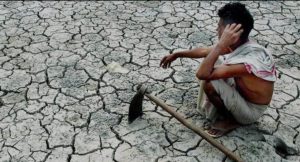
Dhaka had changed, she thought. Or rather, the climate around Dhaka had changed it.
As she waited for her bus, a sudden rush of hot wind swept through the street. It carried the smell of garbage from the overflowing bins, worsened by the heat. Waste dried quickly, leaving behind a pungent odor that drifted through the city. The municipal workers tried their best, but they were outnumbered by the sheer volume of waste produced every day—another burden made heavier by rising temperatures.
When the bus arrived, Ayesha climbed aboard, feeling the blast of trapped heat inside. The ceiling fans spun but offered little relief. The other passengers sat silently, conserving their energy. Talk of heat, water shortages, and unexpected storms had become common, but today everyone seemed too exhausted even for that.
Across the city in Korail slum, 14-year-old Rafi filled buckets with water from a shared tap. The line was long, as always. Water scarcity had worsened over the last few years, especially in summer. His mother had sent him early, but half the neighborhood seemed to have the same idea.
“Better hurry,” an older woman said behind him. “They cut the supply yesterday without warning.”
Rafi nodded. Water cuts, power failures, and sudden flooding were part of life here. During the monsoon season, the narrow walkways often disappeared under murky water. The slum, built on low-lying land, was one of the first places to flood and one of the last to dry. People used bricks or wooden planks to move around, but their homes still soaked, their belongings damaged.
Climate change was no longer something people heard on the news; it was something that climbed into their homes.
Later that afternoon, dark clouds gathered unexpectedly. The heat broke with a sudden wind, and within minutes, heavy rain pounded the city. Streets flooded quickly. Drains overflowed. Traffic came to a standstill. Ayesha watched the water rise around her bus—ankle-deep, then knee-deep within an hour.
These sudden downpours had become unpredictable. Too much rain too fast overwhelmed the city’s drainage. People who lived in basement rooms or ground-floor apartments often lost everything in a single storm.
By the time Ayesha reached home, the street outside her building looked like a small river. Children splashed in the water while adults struggled to protect household items from getting wet.
She stood at her doorway and sighed. Climate change wasn’t some distant threat; it was reshaping daily life, pushing the city and its people to adapt constantly.
That night, as she lay under the slow-moving ceiling fan, Ayesha wondered what the future held. For Rafi, for her students, for millions living across Bangladesh. The city was alive, vibrant, hopeful—yet vulnerable. And every year, the impacts grew sharper, more real.
Still, she believed in the resilience of her people. Bangladesh had always endured hardships. Now, they faced a new challenge, one that demanded awareness, action, and unity. And she hoped the world was listening.